The Right To Hope
with cancer
One couple’s commitment, to help make hope a given.
For everyone facing brain cancer and the other cancers with the lowest survival.
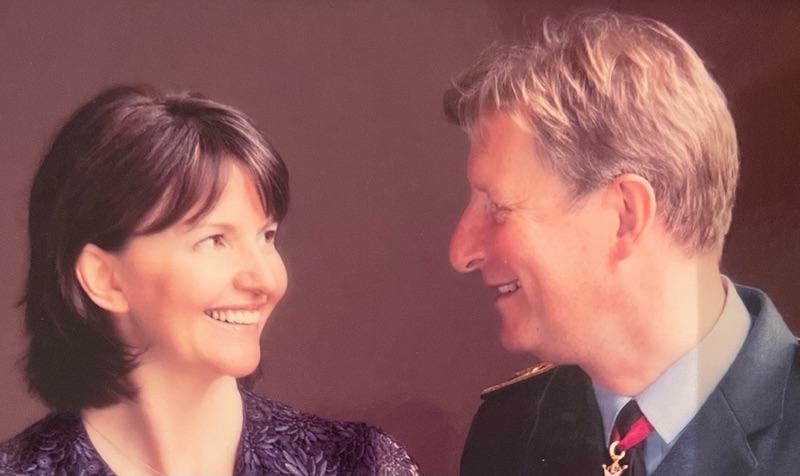
Air Marshal David Walker with my wife Catherine.
One couple’s commitment, to help make hope a given.
For everyone facing brain cancer and the other cancers with the lowest survival.
Air Marshal David Walker with my wife Catherine.
I am a former fast jet pilot, a PhD holder, and a deeply loved husband with an especially contented life together.
I have also been diagnosed with brain cancer.
It was a quirk of biology that gave me this cancer but it is a perpetual lack of funding which seals its incurable fate.
Perpetual means that it has been tolerated. Tolerated, and accepted, that people diagnosed with brain, and certain other cancers, will not be given the same right to hope. No one should have to face cancer with the entrenched disadvantage of one hand tied behind their back.
I do not want to be defined by brain cancer. I want to be defined by doing something about it. To not take action means cancer takes over.
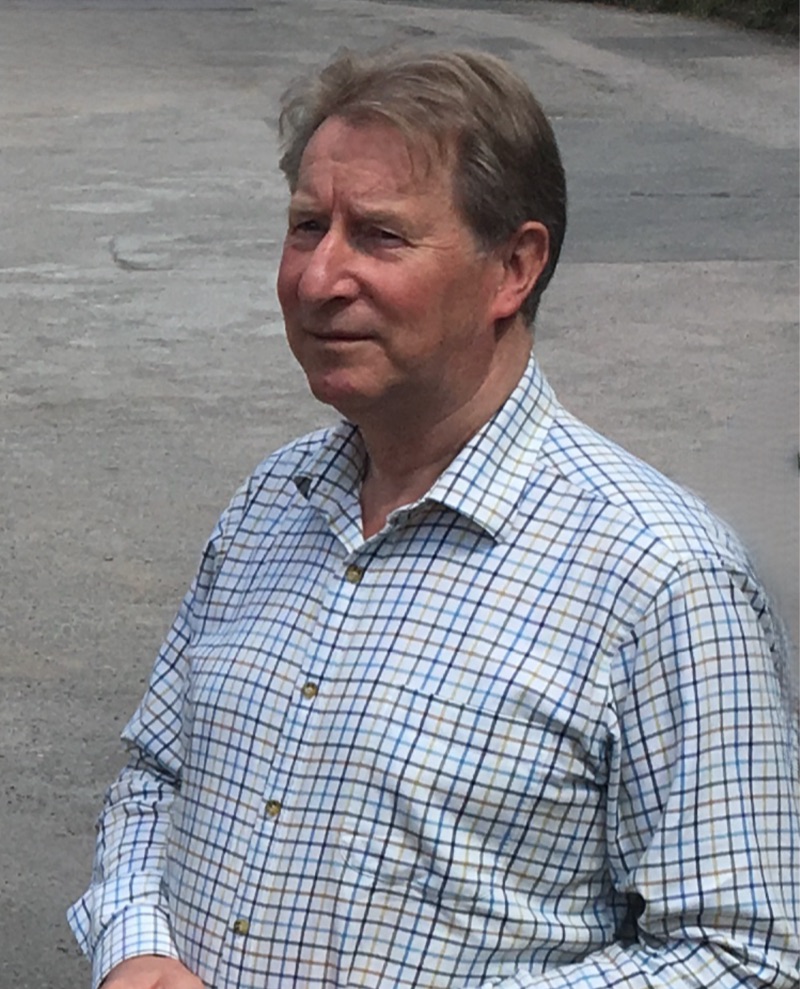
Tragically, David died less than a year after his diagnosis.
He hoped the message in the following video would be seen as his final leadership duty - within a lifetime of service.
The images were chosen by David.
Music in the video: Men of Honor Pt 2, composed by Thomas Bergerson. Used by very kind license.
David wished to show the quiet human impact, beyond the statistics, of a cancer whose survival rate has barely improved. What I see, is my husband’s unshakeable human spirit as he faced it. And his courage and grace in wishing to turn personal tragedy into hope for others.
Further background to David’s video is given later in the website.
While brain cancer is the primary focus of our awareness and fundraising efforts, we wanted to extend our support to improving outcomes for all the cancers defined under the Less Survivable Cancers Taskforce:
Brain, Pancreatic, Liver, Lung, Oesophageal, and Stomach cancer.
David felt that if his video helped to raise awareness and improve future outcomes for even one person - it would be his humble privilege to do so.
Help make hope a given
The Right to Hope is a commitment, made by David and me as a couple. It engages directly with decision-makers, expert clinicians, and others to address issues systemically and enable sustained research progress. Through this, it aims to support the work of existing charities and organisations. Its philosophy is underpinned by respect for the complexity of government and the competing priorities all governments face.
To give a sense of our engagement with governments, my request in David’s honour is outlined below.
For our fundraising, and awareness of the organisations we support, the donate button links to our fundraising page.
Thank you to everyone who might feel able to help make hope a given for all the less survivable cancers. And for believing in what is possible.
In honour of David’s final duty, by Catherine
Having supported national decision-makers for more than two decades, I understand and respect the complexity of competing priorities, and the difficult decisions governments face every day.
So what I say next comes with the heartfelt emotion of a wife, combined with professional respect and pragmatism - which mean I will never ask for anything I do not believe to be reasonable and achievable:
In representing David, and the duty we felt to step forward for those diagnosed with a less survivable cancer, I humbly and respectfully urge the owners of national cancer strategies to lead with the belief that everyone with cancer matters equally.
And to therefore offer the uniquely enabling leadership that only governments can bring to understand why survival from some cancers perpetually lags behind, and where barriers to sustained research progress exist. And then seek to do what is within their pragmatic gift to reduce or remove these barriers. For brain cancer, many of the systemic issues are described here.
No cancer should - knowingly - be left behind. I have never met anyone who would ever wish that to be the case. The transformative and responsible curiosity of government, and its ownership, can create the conditions for that to change.
For almost a generation to pass with no new treatments being added to the standard of care for Glioblastoma speaks more powerfully than I ever could for this pressing need.
For me, David’s courageous video speaks most powerfully of all.
I therefore ask, respectfully on David’s behalf, that national cancer strategies and plans reflect sustained focus on the cancers where survival has perpetually lagged behind. And that they be given formal oversight within the structures which exist to ensure momentum continues, regardless of government or ministerial change.
Government leadership alone is not the singular solution. But government leadership alone has the combination of both the authority and the responsibility that can enable solutions to flow.
What feels intractable can become possible when authority and responsibility align for good. Together, this could achieve the most noble of things: help save lives.
Please, may my husband’s courage matter.
Behind the Right to Hope, with Catherine
Can you tell us more about your very poignant video?
The video was something David felt compelled to do, from early in his diagnosis, when we learned more about the persistently low survival rates for certain cancers - not because we were ever inclined to share, but because David felt some principles mattered enough to show. David wanted to give an insight into the human cost, beyond the statistics and beyond words. Not because he ever once felt personally aggrieved by the tragedy we were facing - his strength of character throughout was exceptional. It was because we did not wish to be passive in addressing, for others, what could perhaps have been addressed long ago. The more we learned about the issues, it strongly indicated to us that the single biggest difference would come from government leadership - the political will to address the known impediments to progress, and thereby enable science to move these cancers towards improvement. We would never have presumed to ask governments for anything previously - and we are resolutely apolitical. But leadership did not feel like too great a request - and it felt that David had perhaps earned the right to state it. I am grateful to our (then) MP for echoing that, in David’s name.
David understood it would take me some time after he tragically died to feel able to complete the video, and to show it publicly. It is of course deeply personal, and I could not have done it without kind support. But what would it have said about my courage if I had not been prepared to try to match David’s. We considered ourselves private people - this is not a natural thing for me. But I can’t, and won’t, stand back on brain cancer.
Our experience of cancer together, in what David called ‘our little coalition of 2’, was to humbly acknowledge an incurable diagnosis and, at the same time, to strive for even one more day together, never letting go of what is possible day by day. David wanted to show how that feels. He never once had a moment of ‘why me’ for himself. His grace and strength were incredible. His focus was always on what he could still do - and what he could do to improve outcomes for others, in whatever time we had left.
The central part of the video has many meanings for us. On one level, it was about defying cancer - in whatever way we could - until the illness tragically took over. David’s tumour brought weakness to his left side, affecting his mobility and arm. It was how the tumour suddenly first made itself known. Nature did not permit the strength to return to David’s arm. But David was determined, with nature’s cooperation, to try to reclaim the rest of what cancer had taken. He didn't do it to inspire - it was our way of doing something about the cancer, when so much of what we were hearing was focussed on what couldn't be done, and what wasn't possible. We set a goal to walk through cancer our way, in defiance and for however long nature would permit. And we did, hand-in-hand as was our way. I know what it took for David to do that. I know what every step meant. The leadership I now humbly seek from governments will involve their effort - but nowhere near that personal scale.
All the images of David during his illness, and of us together, were chosen by David. They were taken during a time when we were still able to have one or two outings. David then selected those images specifically for the video. He had taken off his supportive arm sling just before, because he felt it got in the way of us holding hands. He therefore felt those images showed both the physical and emotional impact of cancer on us - he did not wish to shy away from showing either.
The video was not about overcoming disability. We have never believed that the way someone moves through the world defines their worth or their innate self. In the video, David wanted to show himself both before and during cancer - with and without his wheelchair - because he is the same person throughout. We felt very strongly about that. For that reason, and of specific significance to us, it is also a humble and respectful challenge to assumptions that can be made.
‘Don’t believe in impossible’ was our encouraging call - and our heartfelt thank you. To all those who work tirelessly to improve outcomes. And who, like us, never let go of what is possible.
For the challenging moments when David knew I would be taking forward the Right to Hope on my own, he told me to hold close for reassurance the words of Theodore Roosevelt. I feel that the sentiments apply to all the organisations and individuals who have worked with such commitment - undeterred - long before our own cancer experience led us here.
Why ‘the Right’ to Hope?
The first thing we learned about Glioblastoma, the brain cancer David had, was that it is incurable. Treatments and outcomes have barely changed in a generation. A significant reason for this is the - perpetually - low level of national cancer funding for brain cancer, and the impact on vital research.
Brain cancer takes the lives of more children, and adults under 40, than any other cancer. Yet it has historically received just over 1% of national cancer funding. We found that hard to comprehend, and even harder to accept.
David and I had more than six decades of public service between us. We understood resource issues, competing demands, and complex decisions. But I equally could not grasp why any cancer with a perpetually low survival had not triggered a sustained focus and commitment at government level - by the owners of national cancer strategies. As with anything in life, if results barely improve, it deserves proactive focus to understand why, and to bring it to where it needs to be. It should not - knowingly - be perpetually left behind. Yet here we were talking about people’s lives - the life of my husband - and it felt that they were being left behind. That was visceral for me.
We therefore established the Right to Hope.
What are its aims?
To do what it can to break down the barriers to hope for brain cancer and the other cancers with the lowest survival.
It currently does this by:
Why did you decide to extend it beyond brain cancer?
Brain cancer was the tragedy we faced. But everyone facing cancer deserves hope - too many other people also know how it feels to receive a devastating prognosis.
I am grateful to Brain Tumour Research and the Less Survivable Cancers TaskForce for their support to David and me in this effort.
David’s video shows our personal and tragic experience of Glioblastoma. We would not feel qualified to talk about the other cancers. But if we can help - even in a small way - to raise broader awareness and increase funding, that is what we wanted to do.
Is Right to Hope a charity?
No, we wanted to champion expert organisations and charities. So we made a decision not to establish the Right to Hope as a charity itself for now.
Importantly, fundraising done in the name of the Right to Hope does not come to the Right to Hope - there is deliberately no mechanism to do so. Fundraising in the name of the Right to Hope is divided between the nominated recipients on our fundraising page, and goes to them.
Your closing words are for your husband…
If the Right to Hope can achieve anything, it is entirely down to David’s courage. When he first wrote for this website, he said he did not wish to be defined by brain cancer - but by doing something about it.
That is now my sad, but privileged, personal purpose. I hope David will be defined not only by his brilliant flying career, inspirational leadership, and lifelong service to others, but also by his commitment to help save lives - even as he faced the end of his own.
David’s selfless courage, dignity, and humility will forever be etched on me. I could not be more proud of him - and it will always be my greatest privilege to forever be by his side.
David's own words...
This website, a work in progress, will support the effort to level up hope for all the less-funded cancers. I do it for all those going through the illness and their desperate families.
I dedicate it to my devoted wife Catherine who carries me through with heartbreak and resilience, tenderness and resolve, helplessness and determination. She, and all loved ones in our situation, strive for our lives and never fail us. Science must now be enabled to do the same.
Catherine and I designed this together, have gone through cancer together, and devised our campaign together. When the time comes, I pass the baton to her as my sole authority and my life's wingman.
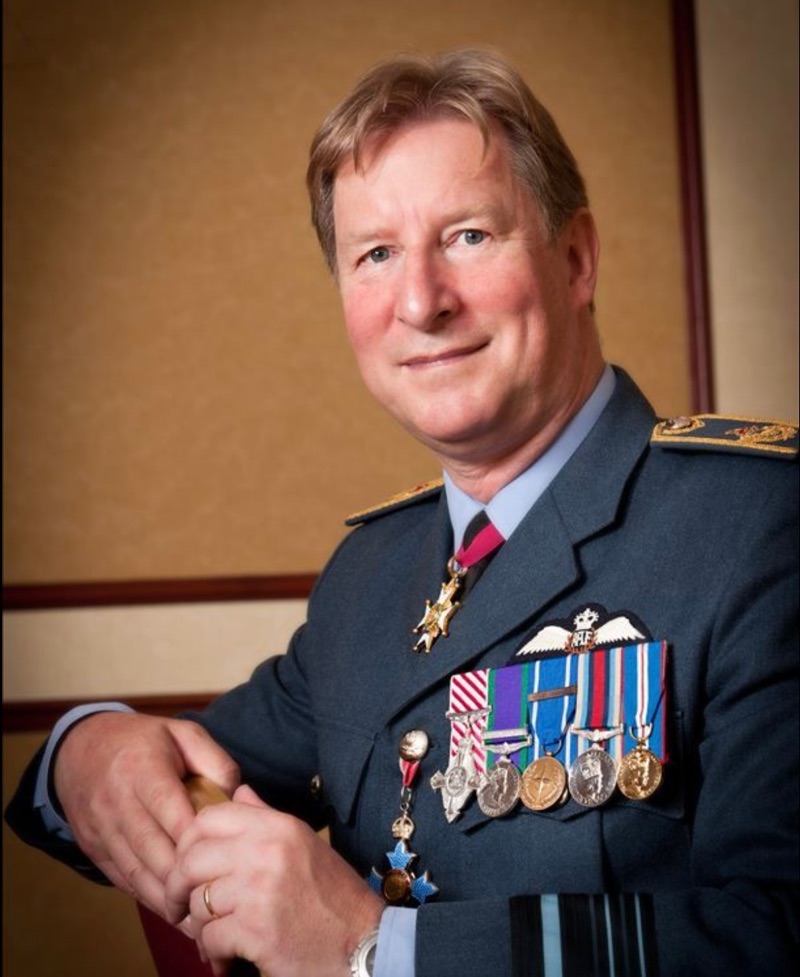
Air Marshal David Walker.
The statistics in the video may change over time. Latest information can be found here: https://braintumourresearch.org
The statistics in the video may change over time. Latest information can be found here: https://braintumourresearch.org
It is not the critic who counts: not the man who points out how the strong man stumbles or where the doer of deeds could have done better. The credit belongs to the man who is actually in the arena, whose face is marred by dust and sweat and blood, who strives valiantly, who errs and comes up short again and again, because there is no effort without error or shortcoming, but who knows the great enthusiasms, the great devotions, who spends himself in a worthy cause; who, at the best, knows, in the end, the triumph of high achievement, and who, at the worst, if he fails, at least he fails while daring greatly, so that his place shall never be with those cold and timid souls who knew neither victory nor defeat.
Theodore Roosevelt